IM200 Smart Optical Imager
 AAC Clyde Space
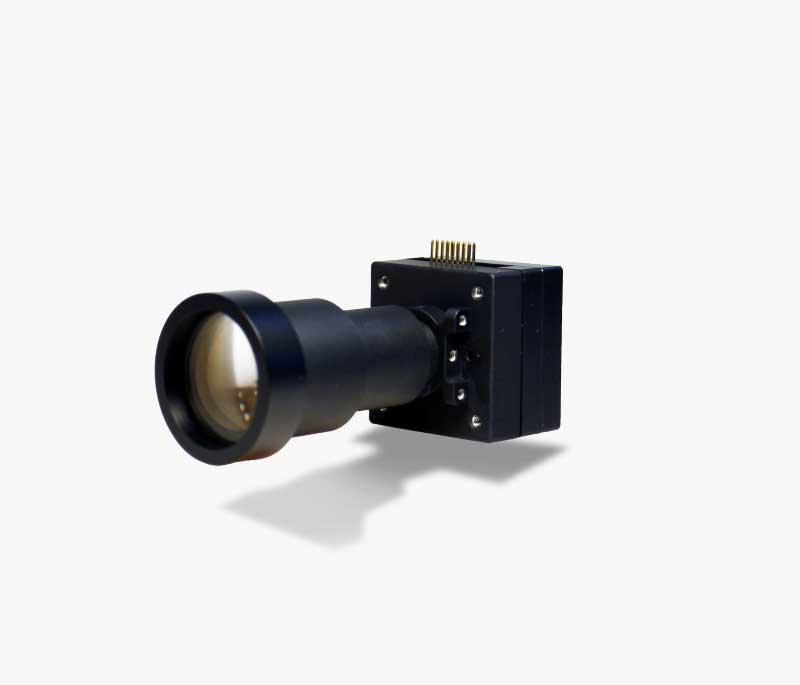
The IM200 is a versatile 4 Mpixel smart optical imager for small satellites and CubeSats, offering high-speed data transfer and real-time image processing capabilities.
Typed specifications53 values
Discloses 3 of 14 fields engineers filter by in this category (category median 4).
- Mass
- 59 g using 50 mm F2.0 lens · datasheet p.2 59 g using 50mm F2.0 lens
- Envelope (L×W×H)
- 29 x 29 x 70.7 mm datasheet p.2 29 x 29 x 70.7 outer dimensions
- Sensor resolution
- 4 Mpx datasheet p.1
- Supply voltage
- 3.65 V typ. · Supply voltage · datasheet p.2 3.6 V min · Supply voltage | 5 V max · Supply voltage | 3.6–5 V supply voltage min-max | 3.65 V nom. · typical supply voltage
- Power consumption
- 0.7 W nominal · datasheet p.1 0.7 W Typ. at 3.65V, at 5Hz full frame capture rate | 0.4 W min · Power consumption | 0.7 W typ. · nominal (< 700 mW) | 0.7 W typ. · Power consumption (At 3.65V, at 5Hz full frame capture rate) +3
- Data interface
- RS-422 optional · datasheet p.1 UART TTL UART command interface | USB USB2.0, default image transfer | UART | RS-485 optional +4
- Operating temperature
- -20 °C min · datasheet p.2 40 °C max | -20–40 °C
- Radiation tolerance (TID)
- 9 krad datasheet p.1 9 krad min · >9 | 9 krad min · qualified up to 9 krad (Si); >9 krad (Si) | 9 krad max · qualified up to
- Camera type
- panchromatic monochrome version · datasheet p.1 RGB RGB version
- Focal length
- 16 mm Standard lens · datasheet p.1 16 mm standard lens option, F1.2 | 25 mm standard lens option, F2.0 | 25 mm Standard lens | 35 mm standard lens option, F2.0 +3
- Flight heritage
- Spaceflight heritage in LEO since 2019; modified version of the AAC Clyde Space ST200 Star Tracker, flown on multiple missions since 2015 datasheet p.1
- Satellite class
- nanosat 1-10 kg aimed at small platforms, such as nano-satellites · datasheet p.1
- F-number
- 1.2 16 mm lens · datasheet p.1 2 25 / 35 / 50 mm lens
- Frame rate
- 5 fps full resolution, USB2.0 · datasheet p.1
- Sensor format (pixels)
- 2048x1944 full frame size · datasheet p.2
- Data interface speed
- 480 Mbps USB2.0 high speed image transfer · datasheet p.1
- On-board compression
- lossy (JPEG / JPEG 2000) JPEG for fast previewing · datasheet p.1 none (raw) up to 25 full frame raw images in buffer
Each value is typed with its unit and measurement condition and cites the datasheet page it was taken from. Nothing is guessed: a field that is absent here has not been published by the manufacturer. machine-extracted ✓ checked by NewSpace Market ✓ manufacturer confirmed by the manufacturer.
As published by the supplier7 lines, in the manufacturer's own wording
- Resolution
- 4 Mpixel
- Data interface
- High-speed USB2.0 (480 Mbps)
- Optional data interface
- Medium speed RS422/RS485
- Frames per second (full resolution)
- 5 frames
- Internal buffer storage
- Up to 25 full-frame images
- Image compression
- JPEG
- Flight heritage
- LEO since 2019 (IM200), multiple missions since 2015 (ST200 Star Tracker)
About
The IM200 Smart Optical Imager is a versatile, low mass, and low power general-purpose imager designed to provide medium resolution imaging capability to small satellites and CubeSats. Based on the ST200 Star Tracker platform, it features a 4 Mpixel resolution and a high-speed USB2.0 interface, capable of capturing 5 frames per second at full resolution. The imager includes a large internal buffer that can store up to 25 full-frame images, which can be compressed into JPEGs for fast previewing. The default version uses USB2.0 for image transfers, presenting itself to the host system as a mass storage device. The IM200’s CPU power enables real-time processing of images, allowing it to function as a target-tracking imager, a docking camera, or an inspection camera. Its small form factor and low mass provide significant flexibility for a wide range of applications, including use on larger satellite platforms where additional interfaces, power supply ranges, and optics are available. Optional features include a medium-speed RS422/RS485 interface. The IM200 has spaceflight heritage in LEO since 2019, and its heritage is considered somewhat higher due to its modification from the AAC Clyde Space ST200 Star Tracker, which has flown on multiple missions since 2015.
Documentation
Need the full ICD, test reports or a specific revision? Ask the supplier directly.