LEOLINK64 Ka-Band Active Beam Steering Antenna
 ReliaSat
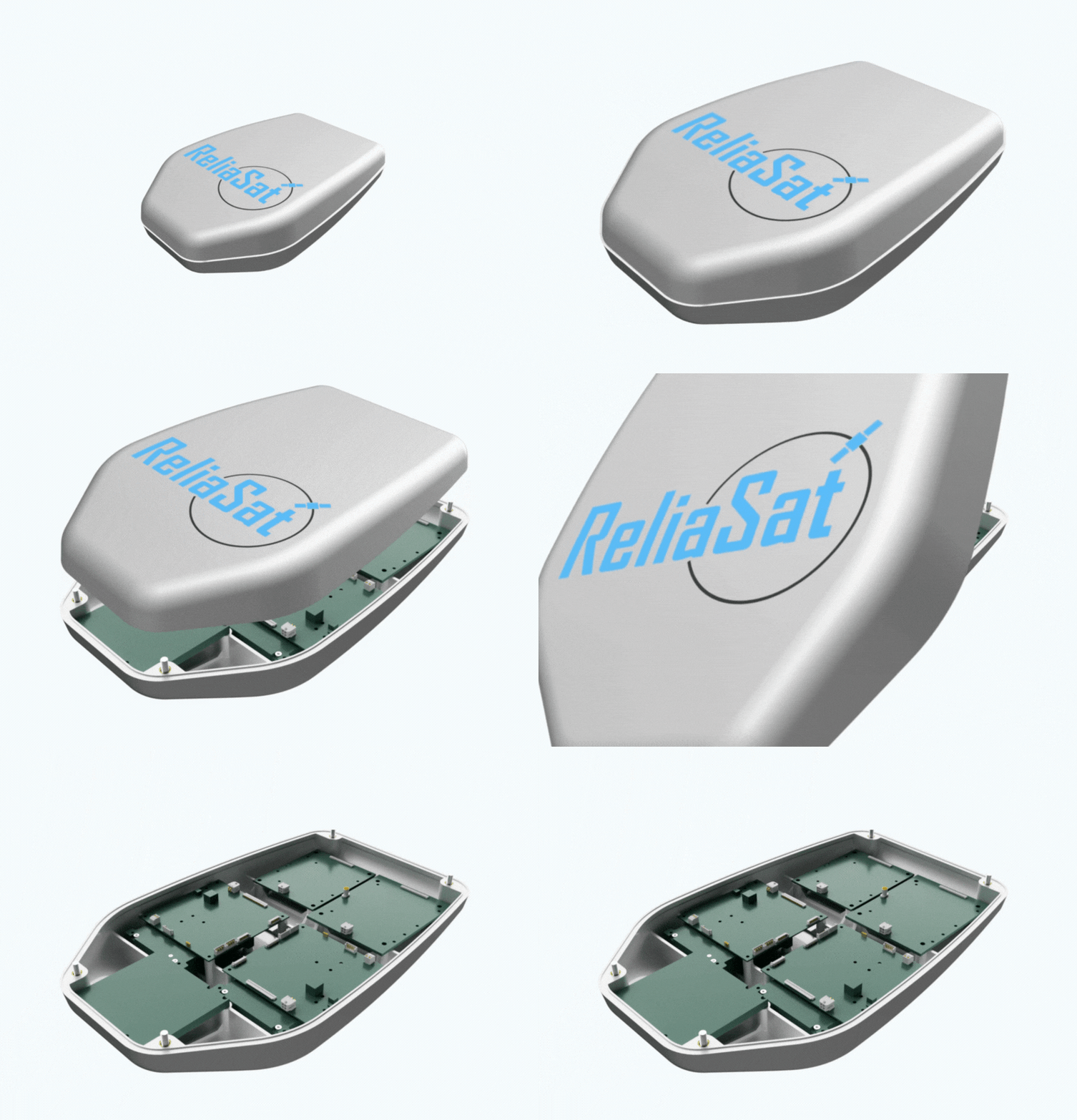
The LEOLINK64 is a Ka-band 64-element electronically steerable phased array antenna with +/-60 degree beam steering in azimuth and elevation, covering TX 27.5-30 GHz and RX 17.7-20.2 GHz for LEO satellite, aviation, and mobile SATCOM applications.
Typed specifications54 values
Discloses 7 of 10 fields engineers filter by in this category (category median 2).
- Frequency band
- Ka datasheet p.1 Ka Receive 17.7-20.2 GHz | Ka RX | Ka Transmit 27.5-30 GHz | Ka TX
- Peak gain
- 21.9 dBi Receive, 0 degree scan · datasheet p.2 21.9 dBi Receive, 0° scan | 18.4 dBi Receive, 60 degree scan | 18.4 dBi Receive, 60° scan | 22 dBi Transmit, 0 degree scan +3
- Frequency range
- 17 700–20 200 MHz Receive · datasheet p.1 27 500–30 000 MHz Transmit
- Beamwidth (-3 dB)
- 14.2 ° HPBW Receive, 0° scan · datasheet p.2 23.2 ° HPBW Receive, 60° scan | 13.6 ° HPBW Transmit, 0° scan | 22.4 ° HPBW Transmit, 60° scan | 14.2 ° Receive, 0 degree scan +3
- Envelope (L×W×H)
- Board Size 110.5 x 90.5 mm (transmit) datasheet p.2 120 x 90.5 mm Receive board size | 110.5 x 90.5 mm Transmit board size | Board Size 120 x 90.5 mm (receive)
- Polarization
- circular datasheet p.1 LHCP, RHCP Receive | LHCP, RHCP Transmit | LHCP TX | RHCP TX
- Antenna type
- Beam Steering Antenna datasheet p.1 other Beam Steering Antenna (flat geometry, active transmitting)
- Power consumption
- 6.4 W DC Power Consumption, Receive · datasheet p.2 9.6 W DC Power Consumption, Transmit | 6.4 W Receive section DC power consumption | 9.6 W Transmit section DC power consumption
- RF connector
- 2.92 mm 2.92 (K) · datasheet p.2 other 2.92 (K) mm | 2.92 mm Receive | 2.92 mm Transmit
- Connector
- 2.92 (K) mm Receive · datasheet p.2 2.92 (K) mm Transmit
- Axial ratio
- 3 dB max · over bandwidth · datasheet p.2
- Max RF power
- 0.001 W Max RF Input Power (Maximum) · datasheet p.2 0.001 W Transmit | 0.001 W max · RF Input Power (Maximum)
- Scan range
- 60 ° Steering Angle ±60°, azimuth and elevation · datasheet p.2
- VSWR, max
- 2 max · Receive · datasheet p.2 2 max · RF Port VSWR <2 | 2 max · Transmit
- EIRP
- 18 dBW Transmit, 0° scan · datasheet p.2 14.6 dBW Transmit, 60° scan
Each value is typed with its unit and measurement condition and cites the datasheet page it was taken from. Nothing is guessed: a field that is absent here has not been published by the manufacturer. machine-extracted ✓ checked by NewSpace Market ✓ manufacturer confirmed by the manufacturer.
As published by the supplier11 lines, in the manufacturer's own wording
- Tx frequency
- 27.5-30 GHz
- Rx frequency
- 17.7-20.2 GHz
- Array elements
- 64
- Steering range
- +/-60 degrees azimuth and elevation
- Tx gain
- 22 dB
- Tx eirp
- 48 dBi
- Rx gain
- 21.9 dB
- Polarization
- Circular (sequential rotation)
- Tx power consumption
- 9.6 W
- Rx power consumption
- 6.4 W
- Profile
- Flat panel, low profile
About
The LEOLINK64 is an active Ka-band electronically beam-steering phased array antenna developed by Arralis for high-data-rate satellite communications with low Earth orbit (LEO) constellations. The antenna provides TX coverage at 27.5-30 GHz and RX coverage at 17.7-20.2 GHz, with full electronic beam steering across +/-60 degrees in both azimuth and elevation using 64 radiating elements and analog phase shifters with amplitude control.
The flat panel, low-profile geometry is designed for integration onto vehicles, aircraft, UAVs, and maritime platforms requiring SATCOM on the move. Circular polarization (via sequential rotation technique for wide bandwidth) meets ITU regulatory requirements for sidelobe and beamwidth compliance through amplitude tapering. TX EIRP reaches 48 dBi with 22 dB TX gain and 21.9 dB RX gain at boresight, consuming 9.6 W in TX mode and 6.4 W in RX mode.
An optional control board add-on provides additional customization for specific operational requirements. The LEOLINK64 interfaces directly with any SDR or satellite modem and is designed to meet growing demand for flat, electronically steerable antennas serving LEO megaconstellation ground segments, airborne connectivity, and autonomous vehicle satellite links.
Documentation
Need the full ICD, test reports or a specific revision? Ask the supplier directly.