S-Band Transceiver SRS-4
 NanoAvionics
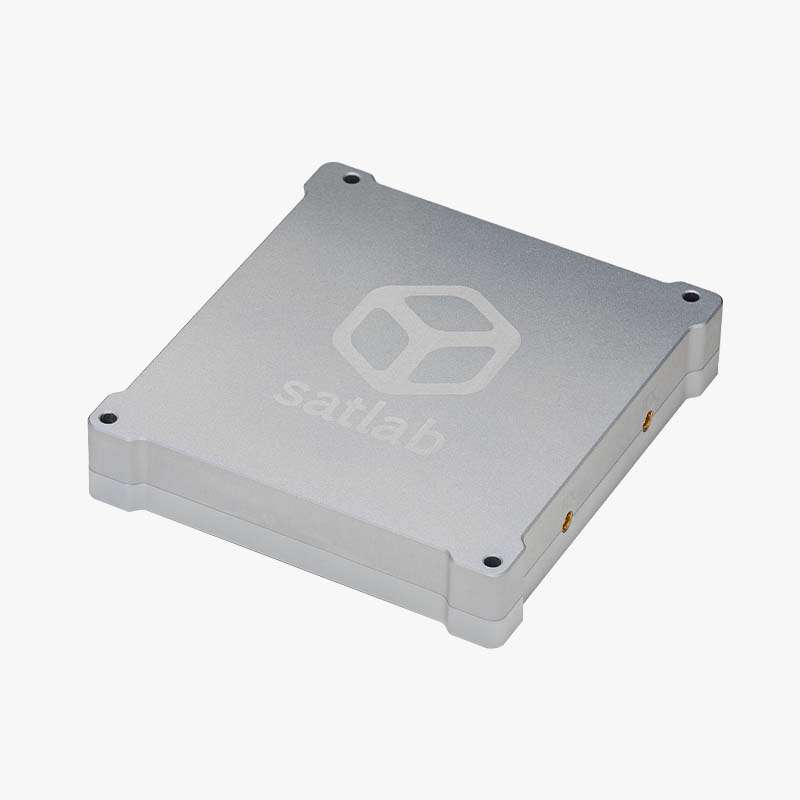
High-speed full-duplex S-band transceiver for micro- and nano-satellites, up to 5 MBd TX, BPSK/QPSK/8PSK, CCSDS coding, 33 dBm output.
Typed specifications7 values
Discloses 2 of 13 fields engineers filter by in this category (category median 3).
- Mass
- 253 g product page
- Frequency range
- 2 200–2 290 MHz product page 2 025–2 110 MHz
- Modulation
- BPSK product page QPSK | 8PSK
- Supply voltage
- 5.1–28.8 V product page
Each value is typed with its unit and measurement condition and cites the datasheet page it was taken from. Nothing is guessed: a field that is absent here has not been published by the manufacturer. machine-extracted ✓ checked by NewSpace Market ✓ manufacturer confirmed by the manufacturer.
As published by the supplier12 lines, in the manufacturer's own wording
- Type
- Full-duplex S-band high-speed transceiver
- Transmit frequency
- 2200 to 2290 MHz
- Receive frequency
- 2025 to 2110 MHz
- Variable transmit symbol rate
- Up to 5 MBd
- Transmit modulation
- BPSK, QPSK, 8PSK
- Receive modulation
- BPSK, QPSK (up to 5 MBd)
- Transmit power
- Adjustable 20 dBm to 33 dBm (with power monitoring)
- Receive sensitivity
- -122 dBm (<1% PER, 100 kBd BPSK)
- Channel coding
- CCSDS-recommended
- Supply voltage
- 5.1 – 28.8 V
- Mass
- 253 g
- Interfaces
- CAN-bus, RS-422 (CSP), Ethernet (IP)
About
The NanoAvionics SRS-4 is a full-duplex S-band transceiver designed for high-speed data transfer on micro- and nano-satellites. It operates on ITU space operations S-band frequencies (TX: 2200–2290 MHz, RX: 2025–2110 MHz) using BPSK, QPSK, and 8PSK modulation with CCSDS-recommended channel coding, enabling integration with both independent and commercial ground station networks.
The SRS-4 supports variable transmit symbol rates up to 5 MBd and receive rates up to 5 MBd, with adjustable output power up to 33 dBm and built-in power monitoring and regulation. CAN-bus and RS-422 interfaces (CubeSat Space Protocol) and an Ethernet interface with IP routing allow flexible integration into the satellite data handling architecture.
The unit weighs 253 g and accepts input voltage from 5.1 to 28.8 V, suitable for a wide range of CubeSat and SmallSat buses. Its high data rate capability makes it ideal for missions with large downlink requirements such as Earth observation or in-orbit experiments.
Documentation
No public datasheet yet — request the datasheet / ICD from the supplier.