NEA® 8040 Series Battery Cell Bypass Switch
 Ensign-Bickford Aerospace & Defense (EBAD)
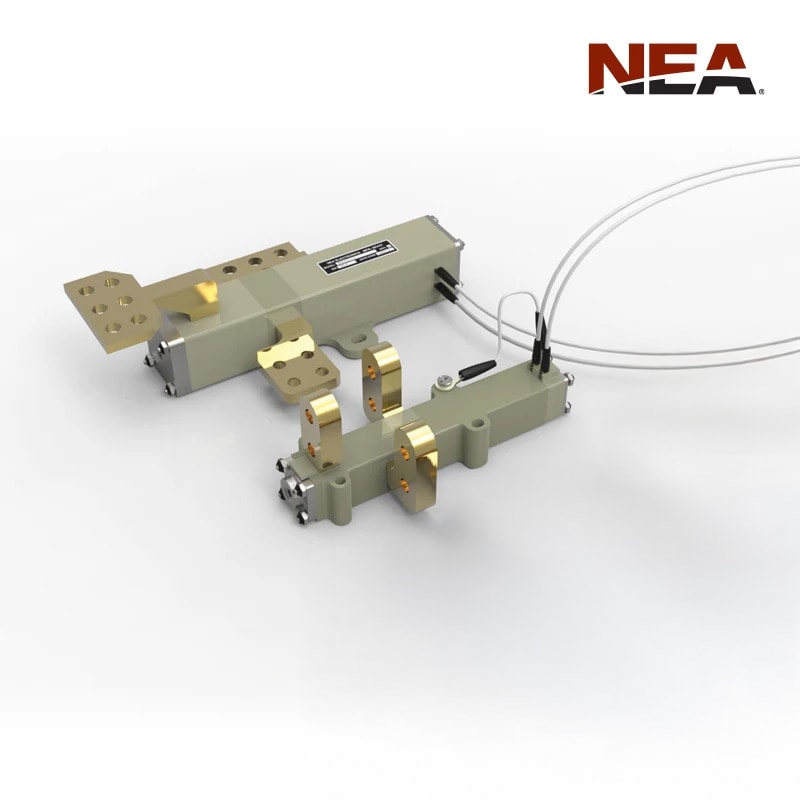
An electrically initiated, one-shot switch designed to bypass and isolate failed battery cells in battery assemblies, offering Make-Before-Break functionality.
Typed specifications1 values
Discloses 0 of 14 fields engineers filter by in this category (category median 7).
- Operating temperature
- -55 °C product page
Each value is typed with its unit and measurement condition and cites the datasheet page it was taken from. Nothing is guessed: a field that is absent here has not been published by the manufacturer. machine-extracted ✓ checked by NewSpace Market ✓ manufacturer confirmed by the manufacturer.
As published by the supplier9 lines, in the manufacturer's own wording
- Continuous current ratings
- 400 A
- Switch resistance
- <150 μΩ @ 400 A
- Fuse wire resistance
- 0.95 to 1.6 Ω @ 25°C
- Minimum actuation current
- 1.2 A
- Nominal actuation current
- 4 Amps for 25 ms
- No-fire current (continuity)
- 250 mA
- Actuation time
- <50 ms
- Make before break duration
- <1 ms
- Qualification temperature range
- -55°C to +85°C
About
The NEA® 8040 Series Battery Cell Bypass Switch is an electrically initiated, one-shot switch that provides critical protection to battery assemblies by bypassing and isolating failed battery cells. It consists of a spring-loaded plunger with highly conductive metal plated electrical contacts arranged in a Single-Pole, Double-Throw (SPDT) configuration, ensuring Make-Before-Break functionality after actuation. The plunger is restrained using patented split-spool and bridge wire technology. These switches are typically placed in series between battery cells and, when activated, bypass and isolate failed cells from the battery assembly. The design ensures no contact bounce during high dynamic loads seen during satellite launch. Make-Before-Break functionality prevents voltage dropout during switching, and low switch contact resistance ensures high continuous current carrying capability for reliable system operation. Some models include built-in Zener diodes for autonomous operation, redirecting current through the actuation fuse wire upon detecting a failed cell, which can reduce costs associated with battery cell sensing and switch actuation circuitry. Key features include availability in non-autonomous and autonomous configurations, ability to carry up to 400 A continuous current, high reliability, long service life, low power switch resistance, lightweight design, extended operating temperature range, compatibility with pyrotechnic initiation circuitry, range safety friendliness, and use of space-rated materials. Factory refurbishment is also available.
Documentation
No public datasheet yet — request the datasheet / ICD from the supplier.