UHF Transceiver (SiriusSat-1/2 heritage)
 SPUTNIX
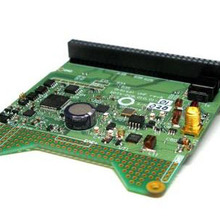
Flight-proven UHF nanosatellite TT&C transceiver (43 g, 87×93×13 mm, 9600 bps, 1 W output, CAN2.0B, PC104) with SiriusSat-1/2 heritage.
Typed specifications10 values
Discloses 3 of 13 fields engineers filter by in this category (category median 3).
- Mass
- 43 g product page
- Envelope (L×W×H)
- 87 × 93 × 13 mm product page
- TX RF output power
- 1 W product page
- RX sensitivity
- -119 dBm product page
- Supply voltage
- 5–14 V product page
- Power consumption
- 0.2 W product page 3.5 W
- Design lifetime
- 1 years product page
- Lead time
- 2 months product page
- Flight heritage
- SiriusSat-1/2, launched 15 August 2018 product page
Each value is typed with its unit and measurement condition and cites the datasheet page it was taken from. Nothing is guessed: a field that is absent here has not been published by the manufacturer. machine-extracted ✓ checked by NewSpace Market ✓ manufacturer confirmed by the manufacturer.
As published by the supplier17 lines, in the manufacturer's own wording
- Purpose
- UHF TT&C data receiving and transmitting for nanosatellites
- Year of release
- 2017
- Design life
- 1 year
- Lead time
- 2 months
- Flight heritage
- SiriusSat-1/2, launched 15 August 2018
- Dimensions
- 87 × 93 × 13 mm
- Mass
- 43 g
- On-board bus interface
- CAN2.0B
- Form factor
- PC104
- Supply voltage
- 5–14 V
- Transmission rate (half-duplex, max)
- 9600 bps
- Power consumption at reception (max)
- 0.2 W
- Power consumption at transmission (max)
- 3.5 W
- Receiver sensitivity
- -119 dBm
- Output power
- 1 W
- Key features
- Half-duplex; in-flight reconfigurable beacon; in-flight firmware update via RF; hardware and software watchdogs; RTC with backup power; ground-to-board bridge mode
- TRL
- 9 (flight-proven)
About
The UHF Transceiver provides data receiving and transmitting in UHF radio for nanosatellites. It is a half-duplex single-board radio for telemetry, telecommand, and beacon with in-flight reconfigurable beacon period, data rate, frequency, call sign, and a ground-to-board bridge mode. Features: in-flight firmware update via RF with backup, hardware and software watchdogs, customizable beacon message, RTC with backup power, and rich telemetry. Dimensions are 87 × 93 × 13 mm, mass 43 g. CAN2.0B on-board bus, PC104 form factor, 5–14 V supply. Receive power ≤0.2 W, transmit power ≤3.5 W, receiver sensitivity -119 dBm, 1 W output. Released in 2017 with 1-year service life and 2-month delivery time. Flight-qualified on SiriusSat-1/2 (launched 15 August 2018).
Documentation
No public datasheet yet — request the datasheet / ICD from the supplier.