Motherboard (w/set of Sensors, Raspberry-Pi and Soft)
 SPUTNIX
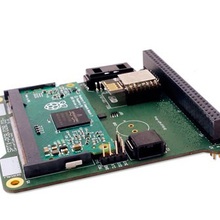
A Raspberry-Pi Compute Module carrier board with integrated sensors and ADCS controller, designed for satellite control and stabilization.
Typed specifications6 values
Discloses 2 of 13 fields engineers filter by in this category (category median 5).
- Mass
- 59 g product page
- Envelope (L×W×H)
- 86.2 × 93.6 × 14 mm product page
- Power consumption
- 0.9 W product page
- Design lifetime
- 1 years product page
- Lead time
- 2 months product page
- Random vibration
- 12 g RMS product page
Each value is typed with its unit and measurement condition and cites the datasheet page it was taken from. Nothing is guessed: a field that is absent here has not been published by the manufacturer. machine-extracted ✓ checked by NewSpace Market ✓ manufacturer confirmed by the manufacturer.
As published by the supplier16 lines, in the manufacturer's own wording
- Purpose
- Designed for satellite control. Provides satellite stabilization and target algorythms performance.
- Year of release
- 2017
- Design life
- 1 years
- Lead time
- 2 months
- Flight qualification of the product
- No
- Brief history of flight qualification
- In the composition of the satellites SiriusSat-1.2 (launched on 15.08.18.).
- Possibility to adapt the product to customer requirements
- No
- Dimensions (w/p PC104 connector)
- 86.2 × 93.6 × 14 mm
- Mass
- 59 g
- Supply voltage
- 5..14 V
- Power consumption, max (sensors and loaded RPi (w/o WiFi)
- 0.9 W
- Data interface
- CAN2.0B Raspberry: Camera I/F, UART, I2C, SPI (2 CS), USB
- Operating temperature range
- -40...+60 °C
- Storage temperature range
- -50..+105 °C
- Mechanical vibration
- 12 g
- Mechanical shock
- 50 g
About
The Motherboard (w/set of Sensors, Raspberry-Pi and Soft) is a Raspberry-Pi Compute Module carrier board specifically designed for satellite control. Its primary purpose is to provide satellite stabilization and execute target algorithms. The board features a flat and flexible architecture where all devices are interconnected via a CAN bus. It includes a slot for Raspberry Compute Module CM1/CM3 and integrates various sensors on the CAN bus, such as a magnetometer, angular velocity sensors, temperature sensors, and voltage/current monitors. The board also incorporates an EM torquer driver and an on-board ADCS controller. A low-power board managing MCU with B-DOT and flight plan capabilities is included, alongside bootloaders with in-flight flash ability and a rich centralized satellite debug system. The product was released in 2017 and has a guaranteed service life of 1 year. It has flight heritage, having been launched on the SiriusSat-1.2 satellites on August 15, 2018. While the product itself does not have flight qualification, its use in actual space missions demonstrates its capability. The manufacturer states that adaptation to customer requirements is not possible.
Documentation
No public datasheet yet — request the datasheet / ICD from the supplier.