Redwire SpectraTRAC Star Tracker
 Redwire Corporation
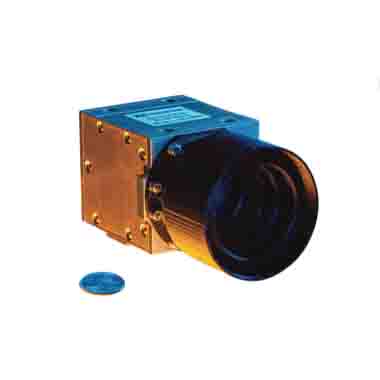
Compact, autonomous Lost-in-Space star tracker for CubeSat, NanoSat, and Spaceflight missions.
Typed specifications49 values
Discloses 10 of 12 fields engineers filter by in this category (category median 8).
- Accuracy, cross-boresight
- 10 arcsec Cross Axis · datasheet p.1 10 arcsec Cross Axis; * 10 arcsec is a test capability | 10 arcsec cross-axis | 6 arcsec cross-axis, < | 6 arcsec max · * The accuracy is <6 arcsec (footnote to 10 arcsec)
- Mass
- 475 g baffle & star tracker · datasheet p.1 475 g w/Baffle
- Accuracy, about boresight (roll)
- 27 arcsec Boresight · datasheet p.1
- Envelope (L×W×H)
- 120 X 61 X 61 L x W x H (mm) w/Baffle · datasheet p.2 120 X 61 X 61 L x W x H w/Baffle
- Update rate
- 4 Hz datasheet p.1
- Max tracking rate
- 2 °/s max tracking rate · datasheet p.2 2 °/s min · Max Tracking Rate > 2.0°/sec | 2 °/s max
- Sun exclusion angle
- 45 ° Sun Exclusion w/ Baffle · datasheet p.1 45 ° w/ Baffle
- Field of view
- 19 ° AFOV is 19° x 14° · datasheet p.2
- Lost-in-space acquisition time
- 0.23 s LIS, TYPICAL · datasheet p.1 0.23 s LIS (Lost-in-Space) | 0.17 s Track (Typical) | 0.23 s nom. · Time to Solution, LIS (typical)
- Supply voltage
- 5 V nom. · DC Voltage · datasheet p.1 5 V DC | 5 V DC Voltage
- Power consumption
- 2.5 W <, Low power consumption · datasheet p.3 2.5 W Average | 2.5 W Average power consumption | 2.5 W max
- Data interface
- RS-422 Serial Interface · datasheet p.1
- Operating temperature
- -30 °C min · datasheet p.1 55 °C max | -30–55 °C Operating Temperature
- Radiation tolerance (TID)
- 75 krad as published, mode unspecified · vendor page (catalogue a
- Design lifetime
- 5 years > , in Low Earth Orbit (LEO) · datasheet p.3 5 years >, LEO | 5 years >, Low Earth Orbit (LEO) | 5 years min · design life > 5 years in LEO
- Export status
- controlled United States; regime not stated, licence may be required · datasheet p.2
- Configuration
- single unit The unit is completely self-contained · datasheet p.1
- Cycles (not used for star trackers)
- 5 Typical design life, 25% duty cycle · datasheet p.2 5 nom. · Typical design life (based on each specific mission), 25% dut…
- Limiting star magnitude
- 6 Mv datasheet p.1
- Flight heritage
- decades of flight heritage combined with the agile and innovative culture of a commercial space platform datasheet p.2
- Satellite class
- CubeSat Nano Sat & Cube Sat Missions · datasheet p.1 NanoSat | nanosat 1-10 kg Nano Sat & Cube Sat Missions
- Baffle
- integrated datasheet p.1
- Volume (with baffle)
- 0.81 U datasheet p.1
- Lens aperture
- 22 mm 22 mm aperture, F1.2 BK7 glass · datasheet p.1
Each value is typed with its unit and measurement condition and cites the datasheet page it was taken from. Nothing is guessed: a field that is absent here has not been published by the manufacturer. machine-extracted ✓ checked by NewSpace Market ✓ manufacturer confirmed by the manufacturer.
As published by the supplier15 lines, in the manufacturer's own wording
- Accuracy (cross-axis / boresight)
- <6 arcsec / 27 arcsec
- Update rate
- 4 Hz
- Max tracking rate
- >2.0 deg/sec
- Time to solution
- 230 ms LIS, 170 ms track (typical)
- Star catalog
- 1889 stars (6th visual magnitude)
- Lens
- 22 mm aperture, F1.2 BK7 glass
- Afov
- 19 deg x 14 deg
- Sky coverage
- >99%
- Mass (with baffle)
- 475 g
- Dimensions (L x W x H, with baffle)
- 120 x 61 x 61 mm
- Power
- 5.0 VDC, 2.5 W average
- Interface
- RS-422 serial
- Sun exclusion angle (with baffle)
- 45 deg
- Operating temperature
- -30C to +55C
- Design life
- 5 years (25% duty cycle, LEO)
About
SpectraTRAC is Redwire’s self-contained star tracker for Spaceflight, CubeSat, and NanoSat missions, offering Lost-in-Space star identification without external initialization. On power-up the unit begins delivering attitude quaternions at a 4 Hz update rate with a maximum slew tracking capability greater than 2 deg/sec.
The tracker uses a 22 mm aperture F1.2 BK7 glass lens and an onboard catalog of 1889 stars (6th visual magnitude), with a 45-degree sun exclusion angle when the baffle is fitted. Cross-axis accuracy is typically better than 6 arcsec (10 arcsec test-capability spec), with boresight accuracy of 27 arcsec. Typical time to first solution is 230 ms (Lost-in-Space) and 170 ms for subsequent tracking.
Including its baffle, the unit weighs 475 grams and measures 120 x 61 x 61 mm, drawing an average of 2.5 W from a 5.0 VDC supply over an RS-422 serial interface. Sky coverage exceeds 99% with an angular field of view of 19 x 14 degrees, and the design life is rated at 5 years in LEO at a 25% duty cycle.
Documentation
Need the full ICD, test reports or a specific revision? Ask the supplier directly.