Reaction Wheel RW1500
 EXA (Astro-und Feinwerktechnik)
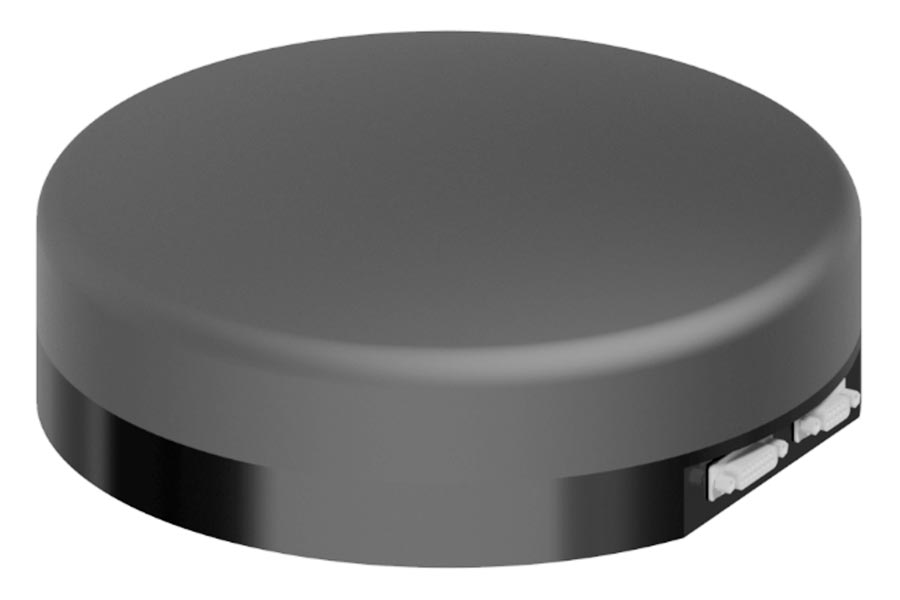
The RW1500 is a reaction wheel currently under development, designed for satellite attitude control with an angular momentum of 25.0 Nms and a nominal rotation speed of 4000 rpm.
Typed specifications19 values
Discloses 5 of 10 fields engineers filter by in this category (category median 5).
- Mass
- 6 000 g as published, mode unspecified · vendor page (catalogue a 6 000 g max
- Envelope (L×W×H)
- 320mm*320mm*120mm datasheet p.3
- Angular momentum storage
- 25 N·m·s @4000rpm · datasheet p.3 25 N·m·s 4000rpm
- Max torque
- 200 mN·m nom. · datasheet p.3 200 mN·m as published, mode unspecified
- Speed range
- 4 000 rpm nom. · datasheet p.3
- Supply voltage
- 22–37 V as published, mode unspecified · vendor page (catalogue a
- Power consumption
- 2.5 W as published, mode unspecified · vendor page (catalogue a
- Operating temperature
- -20 °C min · datasheet p.3 60 °C max | -20–60 °C
- Design lifetime
- 15 years datasheet p.3 15.5 years as published, mode unspecified
- Survival temperature
- -40 °C product page
- Continuous (nominal) torque
- 200 mN·m printed 0.2 Nm · datasheet p.1
- Nominal operating speed
- 4 000 rpm datasheet p.1
- Flywheel moment of inertia
- 0.597 kg·m² datasheet p.0
Each value is typed with its unit and measurement condition and cites the datasheet page it was taken from. Nothing is guessed: a field that is absent here has not been published by the manufacturer. machine-extracted ✓ checked by NewSpace Market ✓ manufacturer confirmed by the manufacturer.
As published by the supplier16 lines, in the manufacturer's own wording
- Angular momentum
- 25.0 Nms @ nominal speed
- Nominal rotation speed
- 4000 rpm
- Nomial reaction torque
- 0.2 Nm Max. commandable reaction torque
- Supply voltage
- 22 to 37 V
- Power consumption
- ≤ 2.5 W Stand by (motor off)
- Power consumption (max)
- ≤ 30.0 W @ nominal speed 0.1 Nm/max speed
- Power consumption (max) (max)
- ≤ 140 W Maximum (0.2 Nm/max. speed)
- Mass
- ≤ 6.0 kg
- Moment of inertia
- 5.97e-2 kg m2 Rotating mass
- Dimensions
- 320 x 320 x 120 mm3
- Operation
- -20 °C to +60 °C
- Start-up
- -30 °C to +60 °C
- Survival temperature
- -40 °C to +65 °C
- Data interface
- CAN/RS485
- Design lifetime
- > 15.5 years
- Storage time
- > 6 years including 1500h of ground operation
About
The RW1500 is a reaction wheel specifically developed for satellite applications, providing precise attitude control. It is currently under development. Key specifications include an angular momentum of 25.0 Nms at nominal speed and a nominal rotation speed of 4000 rpm. The maximum commandable reaction torque is 0.2 Nm. The power interface operates with a supply voltage ranging from 22 to 37 V. Power consumption varies depending on the operational state: ≤ 2.5 W in standby (motor off), ≤ 30.0 W at nominal speed (0.1 Nm/max speed), and a maximum of ≤ 140 W (0.2 Nm/max. speed). Mechanically, the unit has a mass of ≤ 6.0 kg and a moment of inertia of 5.97e-2 kg m2 for its rotating mass. Its dimensions are 320 x 320 x 120 mm3. The RW1500 is designed to operate within a temperature range of -20 °C to +60 °C, with a start-up capability from -30 °C to +60 °C, and a survival temperature range of -40 °C to +65 °C. Data communication is handled via CAN/RS485 interfaces. The design lifetime is specified as > 15.5 years, with a storage time of > 6 years, which includes 1500 hours of ground operation.
Documentation
Need the full ICD, test reports or a specific revision? Ask the supplier directly.