RD809M
 Yuzhnoye Design Bureau
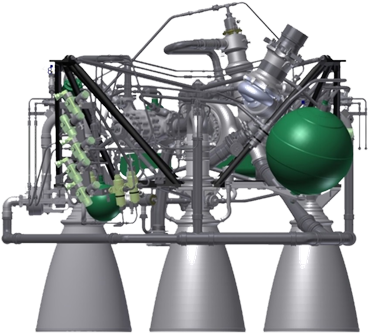
The RD809M is a four-chamber staged combustion cryogenic rocket engine developed by Yuzhnoye SDO for upper stage main propulsion, enabling pitch, yaw, and roll control through individual gimballing of each engine chamber in one plane. It burns liquid oxygen and kerosene propellants, producing a combined 9 tf of vacuum thrust with a specific impulse of […]
Typed specifications6 values
Discloses 5 of 10 fields engineers filter by in this category (category median 3).
- Mass
- 325 kg product page
- Thrust
- 88 259 850 mN product page
- Specific impulse
- 345 s product page
- Propellant
- oxygen product page kerosene (RP-1)
- TRL
- 6 product page
Each value is typed with its unit and measurement condition and cites the datasheet page it was taken from. Nothing is guessed: a field that is absent here has not been published by the manufacturer. machine-extracted ✓ checked by NewSpace Market ✓ manufacturer confirmed by the manufacturer.
As published by the supplier9 lines, in the manufacturer's own wording
- Propellants
- O2 + kerosene
- Vacuum thrust
- 9 tf
- Specific impulse (vacuum)
- 345 s
- Propellant mixture ratio
- 2.5
- Number of chambers
- 4
- Number of starts
- 1
- Engine weight (excl. gimbal drives)
- 325 kg
- Cycle
- Staged combustion
- TRL
- 6
About
The RD809M is a four-chamber staged combustion cryogenic rocket engine developed by Yuzhnoye SDO for upper stage main propulsion, enabling pitch, yaw, and roll control through individual gimballing of each engine chamber in one plane. It burns liquid oxygen and kerosene propellants, producing a combined 9 tf of vacuum thrust with a specific impulse of 345 seconds. The multi-chamber architecture provides redundancy and thrust vector control capability without requiring separate attitude control thruster systems. Weighing 325 kg excluding gimbal drives, the RD809M has achieved Technology Readiness Level 6, demonstrating its operation in a relevant environment. It is designed for medium-thrust upper stage applications where combined attitude control and main propulsion in a single unit reduces system mass and complexity.
Documentation
No public datasheet yet — request the datasheet / ICD from the supplier.