MicroSat-M
 Yuzhnoye Design Bureau
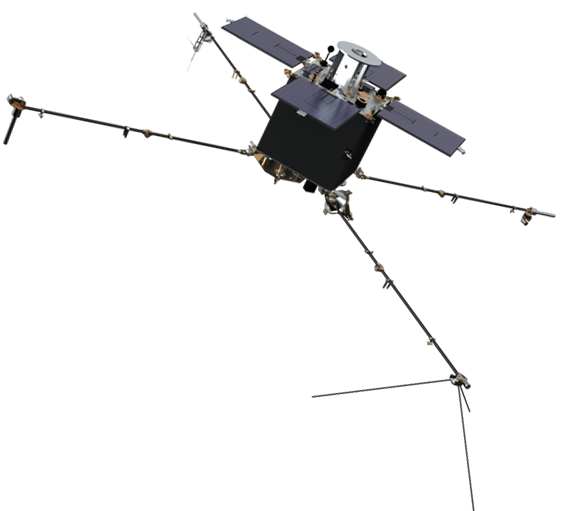
The MicroSat-M is a scientific microsatellite developed by Yuzhnoye SDO for observing dynamic processes in Earth’s ionosphere and conducting technological experiments in the space environment using the Ionosat-Micro scientific equipment complex. Weighing 195 kg with a 75 kg payload, it operates in a circular sun-synchronous orbit at 668 km altitude with 98.1 degree inclination. The […]
Typed specifications9 values
Discloses 3 of 7 fields engineers filter by in this category (category median 3).
- Mass
- 195 kg product page 75 kg
- Design lifetime
- 3 years product page
- Orbit
- SSO product page
- Max payload mass
- 75 kg product page
- Attitude control
- 3-axis stabilised product page
- Pointing accuracy
- 5 ° product page
- Propulsion
- included product page
- Max satellite wet mass
- 195 kg Total mass · product page
Each value is typed with its unit and measurement condition and cites the datasheet page it was taken from. Nothing is guessed: a field that is absent here has not been published by the manufacturer. machine-extracted ✓ checked by NewSpace Market ✓ manufacturer confirmed by the manufacturer.
As published by the supplier16 lines, in the manufacturer's own wording
- Total mass
- 195 kg
- Payload mass
- 75 kg
- Orbit type
- Circular sun-synchronous
- Orbital altitude
- ~668 km
- Orbital inclination
- ~98.1 deg
- Attitude control
- 3-axis active with 3-axis magnetometer
- Orientation accuracy
- 5 deg or less
- Scientific data storage
- 100 Gbytes
- Wave probe frequency range
- 0.1 Hz to 40 kHz
- RF analyzer frequency range
- 20 kHz to 15 MHz
- Magnetometer range
- +/-65,000 nT
- Magnetometer resolution
- 0.01 nT
- Propulsion system
- Ammonia, 0.049 N thrust
- Solar cell efficiency
- 21.5 to 27.5% (GaAs/Ge, InGaP/GaAs/Ge)
- Battery
- Li-ion, 3 A*h
- Design life
- 3 years
About
The MicroSat-M is a scientific microsatellite developed by Yuzhnoye SDO for observing dynamic processes in Earth’s ionosphere and conducting technological experiments in the space environment using the Ionosat-Micro scientific equipment complex. Weighing 195 kg with a 75 kg payload, it operates in a circular sun-synchronous orbit at 668 km altitude with 98.1 degree inclination. The scientific payload includes a Wave Complex measuring electric current density and fields from 0.1 Hz to 40 kHz, a fluxgate magnetometer with plus or minus 65,000 nT range and 0.01 nT resolution, particle density analyzers for both neutral and electronic components, and a radio frequency analyzer covering 20 kHz to 15 MHz. The satellite features experimental solar arrays testing advanced GaAs/Ge and InGaP/GaAs/Ge photovoltaic cells with 21.5 to 27.5 percent efficiency, and an ammonia propulsion system for orbital maintenance over a 3-year design life.
Documentation
No public datasheet yet — request the datasheet / ICD from the supplier.