Gas-Jet Propulsion System (GJPS)
 Yuzhnoye Design Bureau
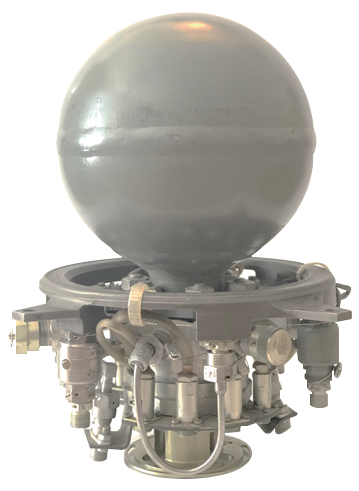
The Gas-Jet Propulsion System (GJPS) developed by Yuzhnoye SDO damps spacecraft initial post-separation disturbances and provides attitude control, orbit correction, and spacecraft spin about any axis using cold gas expelled through thrusters. Working media include air, nitrogen, or argon stored at up to 23 MPa. The system delivers a total thrust impulse of 250 to […]
Typed specifications4 values
Discloses 2 of 11 fields engineers filter by in this category (category median 3).
- Thrust
- 250 000–7 000 000 mN product page
- Specific impulse
- 710 s product page
- Feed / tank pressure
- 230 bar product page 3 bar
Each value is typed with its unit and measurement condition and cites the datasheet page it was taken from. Nothing is guessed: a field that is absent here has not been published by the manufacturer. machine-extracted ✓ checked by NewSpace Market ✓ manufacturer confirmed by the manufacturer.
As published by the supplier7 lines, in the manufacturer's own wording
- Working medium
- Air, nitrogen, or argon
- Maximum bottle pressure (at 20 deg C)
- 23 MPa
- Nominal gas pressure
- 0.3 MPa
- Total thrust impulse
- 250 to 7,000 N*s
- Engine thrust options
- 0.1; 0.2; 8.5 to 55 N
- Thrust excursion
- +/-25%
- Specific impulse
- 710 m/s
About
The Gas-Jet Propulsion System (GJPS) developed by Yuzhnoye SDO damps spacecraft initial post-separation disturbances and provides attitude control, orbit correction, and spacecraft spin about any axis using cold gas expelled through thrusters. Working media include air, nitrogen, or argon stored at up to 23 MPa. The system delivers a total thrust impulse of 250 to 7,000 N·s through thruster options ranging from 0.1 N to 55 N with a nominal gas pressure of 0.3 MPa and a specific impulse of 710 m/s. Thrust excursion is controlled to within plus or minus 25%. The GJPS has completed all required qualification tests including leakage, strength, climatic, mechanical, and endurance testing, and is appropriate for microsatellites and nanosatellites requiring low-disturbance, propellant-free attitude control.
Documentation
No public datasheet yet — request the datasheet / ICD from the supplier.