Green Monopropellant Propulsion System
 Yuzhnoye Design Bureau
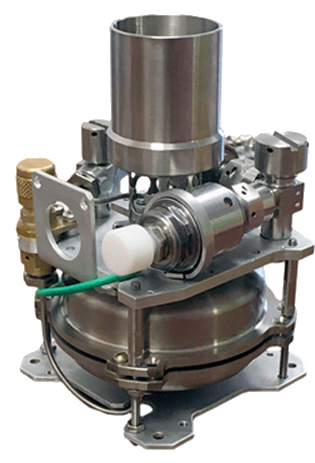
The Green Monopropellant Propulsion System developed by Yuzhnoye SDO is intended for generating thrust impulse bits to extend spacecraft lifetime, particularly for CubeSat-class nanosatellites. Using a HAN-based (hydroxyl ammonium nitrate) green monopropellant with isobutane as the pressurant, the system eliminates the toxicity hazards associated with conventional hydrazine propulsion while delivering comparable performance. It provides 0.153 […]
Typed specifications6 values
Discloses 3 of 11 fields engineers filter by in this category (category median 3).
- Mass
- 1.1 kg product page
- Thrust
- 320 000 mN product page 153 mN
- Envelope (L×W×H)
- 100 x 100 x 135 mm product page
- Propellant
- 0.15 product page
- Propellant mass (full load)
- 150 g product page
Each value is typed with its unit and measurement condition and cites the datasheet page it was taken from. Nothing is guessed: a field that is absent here has not been published by the manufacturer. machine-extracted ✓ checked by NewSpace Market ✓ manufacturer confirmed by the manufacturer.
As published by the supplier9 lines, in the manufacturer's own wording
- Working medium
- HAN-based monopropellant
- Pressurant
- Isobutane
- Total thrust impulse
- 0.32 kN*s
- Thrust
- 0.153 N
- Monopropellant mass
- 0.15 kg
- Power consumption
- up to 13 W*h
- Active period
- at least 1.0 year
- Total mass
- 1.1 kg or less
- Dimensions
- 100 x 100 x 135 mm
About
The Green Monopropellant Propulsion System developed by Yuzhnoye SDO is intended for generating thrust impulse bits to extend spacecraft lifetime, particularly for CubeSat-class nanosatellites. Using a HAN-based (hydroxyl ammonium nitrate) green monopropellant with isobutane as the pressurant, the system eliminates the toxicity hazards associated with conventional hydrazine propulsion while delivering comparable performance. It provides 0.153 N of thrust with a total thrust impulse of 0.32 kN·s, requiring only up to 13 W·h of power consumption per activation. The complete system masses just 1.1 kg or less with compact 100x100x135 mm dimensions, making it ideally suited for CubeSat missions. First deployed on the GS-1 nanosatellite, the system has completed climatic, mechanical, and firing qualification tests.
Documentation
No public datasheet yet — request the datasheet / ICD from the supplier.